


TYPE
Article
DATE
How do personal and collective memories become stories, and how does a story become a book, a performance or a conversation with readers elsewhere in Europe? This was the central question explored by the third edition of Ponta Lopud Book Bridge, held at the Rector’s Palace on Lopud from 17 to 19 September. The festival brought together nearly twenty writers, editors and translators from Ireland, Croatia and the wider region. Entitled Memory, Belonging, Storytelling, the programme traced the entire journey of a story – from what we remember to what ultimately reaches the reader.
“These three days have shown us once again what a special meeting place Lopud can be for people brought together by a shared love of literature. What delights us most are the closeness, new friendships and ideas that have emerged from conversations between our guests and the audience, as well as with one another. We want Book Bridge to continue growing out of encounters like these – as an open and welcoming space to which writers and readers are always happy to return,” said Tilda Grossel Bogdanović, founder of the Ponta Lopud Creative Platform.
The first day of the festival began where memory is at its most painful, with the conversation Literature After Conflict: How Stories Help Us Live with Trauma. It brought together experiences from two European peripheries: Martin Doyle, Literary Editor of The Irish Times, whose memoir Dirty Linen portrays the violence of the Troubles in Northern Ireland through the lives of people from his home place, and Edi Matić and Faruk Šehić, who come from a region that continues to live with the legacy of war. The conversation raised a question that resonated throughout the festival: how can we write about loss in a way that allows a story to become not only a testimony but also a path towards reconciliation? Three distinct portraits of contemporary Ireland followed in the readings entitled Voices of Contemporary Ireland. They featured Sheila Armstrong, recipient of a Special Mention from the European Union Prize for Literature jury; Jessamine O’Connor, whose debut novel Somewhere explores the housing crisis and solidarity; and Louise Nealon, whose new novel became an immediate Irish bestseller upon its release this spring. The evening belonged to Pričigin – Bridge, hosted by Patricija Horvat, Artistic Director of Split’s Pričigin storytelling festival. Jelena Miholjević, Louise Nealon, Danijela Crljen, Marinko Koščec and James Candon set aside their written texts and told personal, unexpected and humorous stories live before an audience, bringing the Croatian and Irish guests together through the spoken word.

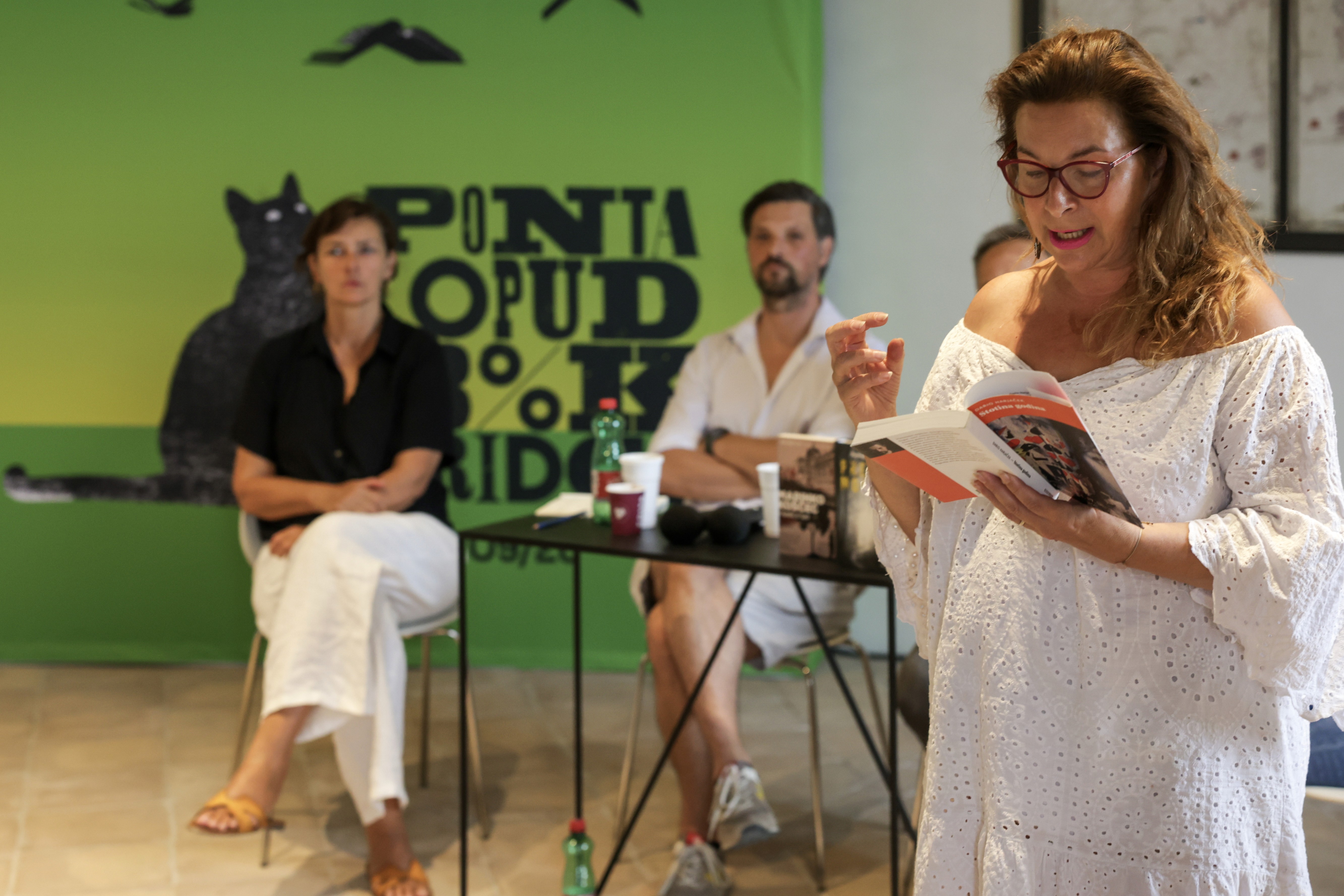
The second day was devoted to the places from which stories emerge. In Different Places, Different Stories: New Irish Writing and Fiction in “Our” Languages, moderated by Aidan O’Malley and Staša Aras, the Irish authors joined Faruk Šehić and Marinko Koščec in comparing the two literary scenes. The conversation explored how changes in place, community and ways of life shape what writers write about today. This theme continued with the presentation of two new Croatian novels, moderated by Patricija Horvat and Staša Aras. In Stotina godina, Dario Harjaček makes Zagreb’s Trešnjevka neighbourhood – and the people who have lived there – his central protagonist. Marinko Koščec, an Associate Professor of Romance Studies whose novels have been translated into English and Dutch, presented his ninth novel, Preko mosta, a title that seemed tailor-made for the festival. The second day concluded with evening readings by Martin Doyle, Faruk Šehić, Jessamine O’Connor and Jelena Miholjević.
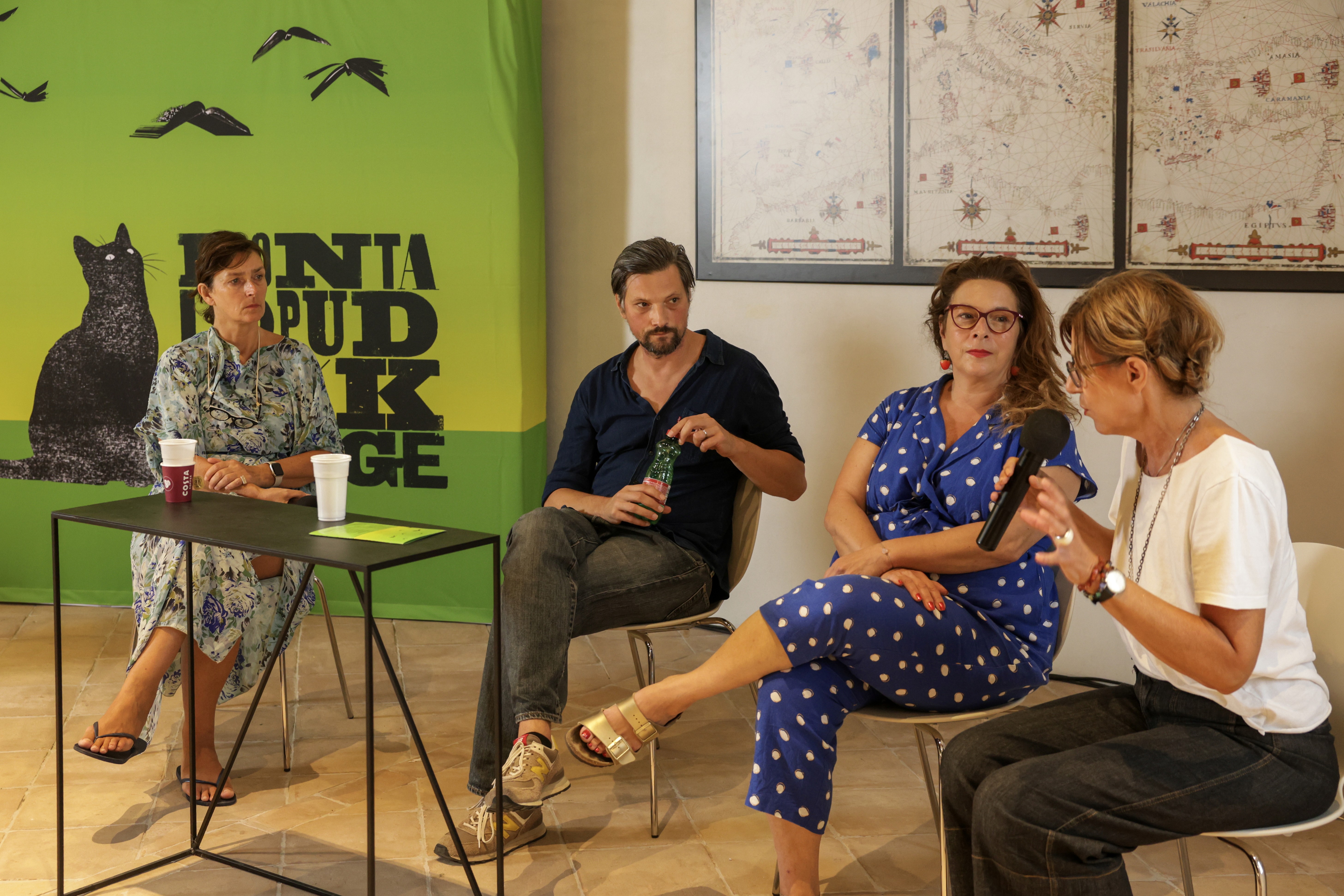
The question of belonging came most directly to the fore in Saturday’s panel Home, Exile and Belonging, moderated by James Candon and Staša Aras. Home was considered both as a real and an imagined place, from the perspectives of authors able to draw on their own lives when exploring the subject. Oona Frawley was born in New York and writes about migration from Ireland, where she now lives. Claire-Lise Kieffer publishes in Ireland and lives in Paris, while Shane Tivenan, winner of the John McGahern Award, continually returns in his fiction to the Irish Midlands where he grew up. Faruk Šehić added a regional perspective to their experiences of departure and return, allowing the conversation about exile and belonging to transcend the boundaries of any single country or language. The story then moved beyond the pages of the book. In From Page to Stage, Jelena Miholjević and Dario Harjaček, who has directed more than forty theatre productions, discussed what happens to a text when it acquires a voice, a body and an audience. From Manuscript to Publication, a conversation with journalist, editor and translator Saša Drach, who has translated some sixty books from English, explored practical possibilities for bringing texts by Book Bridge participants to readers. Following evening readings by Dario Harjaček, Marinko Koščec, Staša Aras, Louise Nealon and Oona Frawley, the festival concluded with the conversation Why Do Stories Matter? Martin Doyle, whose book A Hosting brings together interviews with Irish writers conducted from 1991 to the present, Oona Frawley, Marinko Koščec and Dario Harjaček reflected on literature as a bridge of empathy across linguistic, cultural and historical boundaries.
“The third edition of Ponta Lopud Book Bridge exceeded my expectations, above all because every participant deepened and broadened the subjects we discussed, bringing the perspectives of people who engage profoundly and creatively with pressing questions of both society and our inner lives. When so many serious and creative people come together, time itself somehow becomes enriched by a wealth of new perspectives. I find that genuinely inspiring; it gives me hope, broadens my horizons and makes me feel as though I am seeing the world through different eyes. The festival was truly intense and productive, while Lopud and the Rector’s Palace gave the conversations a distinctive atmosphere that once again led both our guests and us as organisers to recognise that Book Bridge is a truly unique festival,” said writer and Festival Artistic Director Staša Aras.
The third Book Bridge also brought this year’s Lopud summer festival season to a close. Following the sixth Ponta Lopud Film Festival and the fourth Ponta Lopud Jazz Festival, it once again showed that Lopud is more than a festival venue: it is a bridge connecting artists, audiences and islanders, from which stories, music and film continue their journeys long after the final evening.
In 2026, the Ponta Lopud Creative Platform presented three summer cultural programmes for lovers of the arts, particularly film, music and literature. The Ponta Lopud Film Festival, the first of the three events, was held from 25 to 28 June and dedicated to the art of filmmaking. The second programme, the Ponta Lopud Jazz Festival, brought music lovers to the island from 27 to 29 August, while Ponta Lopud Book Bridge transformed Lopud into a literary haven from 17 to 19 September, bringing the summer festival season to a close.


